A draft beer system can be divided into three equipment categories:
- Cooling (Refrigeration)
- Beer Flow
- Gas Pressure
Cooling (Refrigeration)
There are many configurations for cooling and storing keg beer. These include refrigerators
which also known as Kegerators, Mobile Bar units and walk-in room coolers. A less
expensive method of storing beer is to convert a food refrigerator or freezer into
a kegerator (see Keg Conversion Kit and our How-to Workshop). All provide the same
function by storing the keg under refrigeration at a constant 38ºF temperature.
Beer Flow Components
The components of a draft beer system include all the equipment from the
keg to the faucet. These components include the Keg, the Keg Coupler (Keg Tap),
brewery approved Beer and Gas Line tubing and associated Fittings, Beer Shank assembly
and the Beer Faucet. In a counter top dispensing application, a Beer Tower is used.
The Beer Tower assembly commonly includes a Beer Line & Fitting, Beer Shank
assembly and a Faucet.
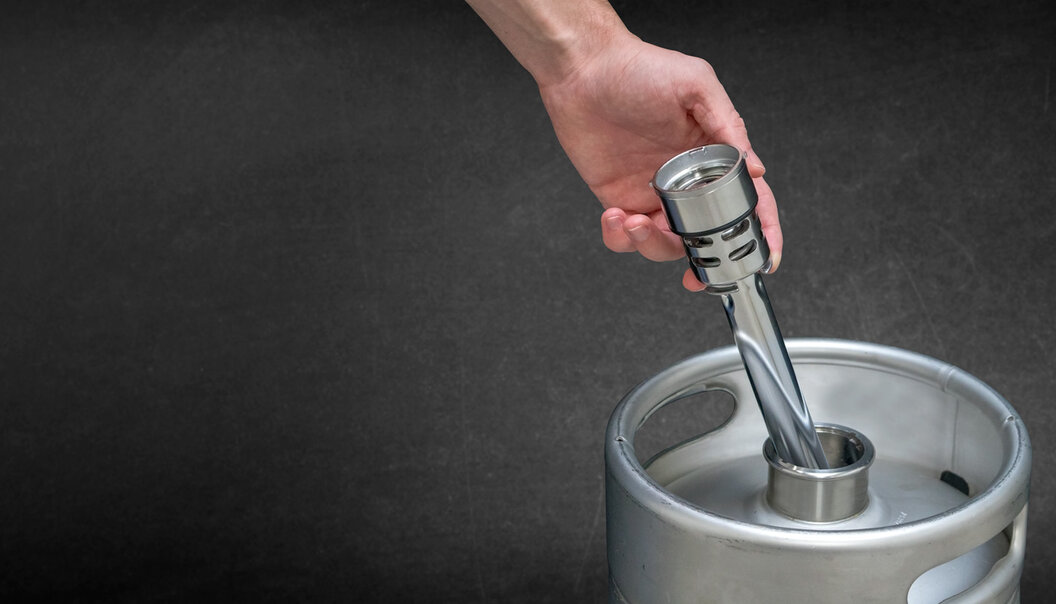
The first component is the Keg which contains a valve with a stainless beer flow
tube. Most North American Brewers use a ½ barrel also known as a full size
keg (15.5 gallons) as the standard keg or a ¼ barrel (7.5 gallons).
- The beer in the keg contains CO2 which
is naturally produced during the fermentation process. The level of CO2
in the beer is determined by the brewer and type of beer in the keg (lager, ales,
stouts, etc.) The level of CO2 varies by type
of beer and because of these differences the amount of Gas Pressure applied to the
keg will also vary to maintain the proper level of CO2
in the beer during the dispensing process.
The Keg Coupler, a.k.a. Keg Tap, is the Beer Flow component that opens the valve
in the keg and allows gas pressure to enter the keg and for beer to flow out. Not
all breweries use the same type of keg valve and beer coupler (keg tap). See our
Beer Brand Coupler Reference List. From the Keg Coupler, beer will flow through
hose nipples and brewery approved Beer Line (flexible tubing) to the Beer Shank
assembly and out the Beer Faucet.
The diameter and length of the beer line plays a major role in controlling the speed
of the beer flow at the Beer Faucet. In most Direct Draw refrigerator draft beer
systems (Kegerators) 3/16" (inside diameter) beer line is used, in Glycol Cooled
draft beer systems where the beers lines can run up to 500 feet (a.k.a. long draw
systems) the Beer Line diameter and material specification will vary according to
the system requirements.
In Air-Cooled systems (maximum run length 30 feet) the Beer Line diameter and material
specification will vary according to the system requirements, and in Wall Mount
direct draw draft beer system the shank assembly connects to a wall mount drain
tray assembly and in most cases 3/16" (inside diameter) beer line is used.
The Beer Faucet is the most visible beer flow component of the draft Beer System.
The Beer Faucet is used to open the system (pour the beer) and close the system
(stop pouring the beer). Beer faucets are also known as Taps or Spigots. The Beer
Faucet connects to the Beer Shank assembly by interlocking teeth between the back
end of the beer faucet (female connection) and the Beer Shank (male connection)
and is tightened with a special Faucet Wrench that connects to the Beer Shank coupling
nut through a series of holes located on the coupling nut.
Gas Pressure Components
These components supplying pressure to the beer keg from the gas source. Starting
with the Gas Cylinder (a.k.a. Air Tank). Gas Cylinders include a shut off valve
to open and close the gas supply and are manufactured in either aluminum or steel
and hold CO2 or CO2
/ Nitrogen blend (a.k.a. mixed gas) for systems and products that require a mixed
gas pressure source (stouts, etc).
A CO2 Regulator regulates the pressure from
the Gas Cylinder (high pressure source) to the keg coupler (keg tap) connected to
the keg valve in the keg (low pressure) where a brewery recommended pressure is
prescribed (generally 12-14 lbs in Kegerators). A Gas Regulator contains a manual
adjusting screw or knob to regulate the amount of pressure supplied to the keg.
A properly adjusted and functioning Gas Regulator is critically important to maintaining
the proper level of CO2 in the beer, too much
CO2 Gas Pressure may add CO2
to the beer and cause foaming problems and too little CO2
Gas Pressure may cause CO2 to release from the
beer causing a flat beer.
For more information, please see our Beer Questions section or the Beer Dispensing Discussion Forum.